
-
LatestThe best Vacuum cleaner of 2026
-
 Bosch Flexxo Serie 4 BBH3ALL28 Handy cordless vacuum for quick everyday home cleanups
-
 Rowenta X-Clean 10 GZ7540 Cordless cleaner vacuums and washes hard floors simultaneously.
-
 Dreame Z40 Station Powerful cordless cleaning with convenient hands-free dust emptying.
-
 Dreame H15 Pro Cordless cleaner tackles spills and debris on floors
-
 Dreame H14 Pro Cordless wet-dry floor cleaning with hot-water self-cleaning
-
 Dreame Z20 Powerful cordless cleaning, versatile tools, and extended runtime
-
-
LatestThe best Vacuum cleaner of 2026
-
 Miele Guard L1 AllFloor Parquet Premium bagged canister vacuum for mixed flooring.
-
 Miele Guard S1 Compact bagged vacuum for dependable everyday home cleaning
-
 Rowenta Silence Force RO7740 Quiet, versatile bagged vacuum for everyday whole-home cleaning.
-
 AEG AB51C2SW 5000 Clean Practical bagged vacuum for everyday floors and carpets.
-
 Nilfisk One Allergy Compact bagged vacuum with HEPA 14 filtration for cleaner homes.
-
 Inventum ST306RZA Practical bagged vacuum for straightforward everyday home cleaning
-
-
LatestThe best Vacuum cleaner of 2026
-
 Philips 2000 Series FC8243/09 Lightweight bagged vacuum for simple everyday floor cleaning.
-
 Philips 2000 Series XB2125/09 Compact bagless vacuum for everyday hard-floor cleaning.
-
 Bosch BGC21POW1 Practical bagless cylinder vacuum for everyday mixed-floor cleaning
-
 Bosch BGC05AAA1 Serie 2 Compact bagless vacuum for everyday cleaning in small homes.
-
 AEG AL61C2OG Clean 6000 Practical bagless cylinder vacuum for everyday household floors.
-
 BOSCH BGC21HYG1 Series 4 Compact bagless vacuum with hygienic filtration for homes
-
-
LatestThe best Vacuum cleaner of 2026
-
 Shark Rotator Pet Pro LA555 Flexible corded upright for floors, stairs, and upholstery
-
 Shark ZU62 Navigator Zero-M Pet-friendly upright with tangle-resistant brushroll, spacious dust cup.
-
 Shark NV501 Rotator Professional Lift-Away Versatile upright with detachable pod and HEPA filtration
-
 Shark ZU561 Navigator Lift-Away Speed Versatile corded vacuum for floors, stairs, and pets.
-
 Shark ZU503AMZ Navigator Lift-Away Versatile corded upright tackles pet hair, carpets, and stairs.
-
-
LatestThe best Vacuum cleaner of 2026
-
 DeWALT D25303DH-XJ Tool-mounted extractor keeps masonry drilling cleaner and faster.
-
 DeWalt DXV20P Wet and Dry High-capacity vacuum for garage, workshop, spill cleanup.
-
 Makita VC4210L Large-capacity workshop vacuum with automatic filter cleaning.
-
 Nilfisk Multi II 30 T Powerful wet-and-dry workshop vacuum for DIY messes.
-
 Nilfisk Multi II 22 T Versatile wet-and-dry vacuum for home workshops and DIY.
-
 Nilfisk Buddy II 18 Compact wet-and-dry cleanup for home, garage, and DIY.
-
-
LatestThe best Robot vacuum cleaner of 2026
-
 Dreame Matrix 10 Ultra Smart vacuum with advanced navigation and mopping features.
-
 Eufy Omni E25 Compact robot vacuum with strong suction and mopping.
-
 Philips HomeRun 5000 XU5100/10 Smart, efficient cleaning with advanced navigation technology.
-
 Eureka J15 Pro Powerful vacuuming, smart mopping, and hands-off dock care.
-
 Ecovacs Deebot T50 OMNI Slim, powerful cleaner with hands-off vacuuming and mopping.
-
 Ecovacs Deebot X8 PRO OMNI Premium vacuum-mop with self-rinsing roller and automated dock
-
-
LatestThe best Robot vacuum cleaner of 2026
-
 Blaupunkt Bluebot Xboost BPK-VCBB1XB Affordable robot vacuum-mop for everyday hard-floor upkeep.
-
 Shark AV911S EZ Self-emptying robot vacuum simplifies everyday floor maintenance.
-
 Shark AV753 ION Simple vacuum for everyday dust and pet hair.
-
 iRobot Roomba J7 Smart vacuum dodges clutter, cables, and pet messes.
-
 Eufy BoostIQ RoboVac 11S MAX Slim, affordable vacuum for everyday floor cleaning.
-
 Shark AI Ultra Scheduled, self-emptying floor care for everyday pet hair.
-
-
LatestThe best Hand vac of 2026
-
 BLACK+DECKER BHHV520JF-QW Cordless vacuum for quick home and car cleanups
-
 Philips MiniVac FC6148/01 Compact cleaner for quick crumbs and car touch-ups
-
 BLACK+DECKER DVA325JP07-QW Cordless vacuum for quick pet-hair and crumb cleanups
-
 Shark WV200 Wandvac Lightweight handheld vacuum for quick everyday messes.
-
 BLACK+DECKER PV1820L-QW Pivoting cordless hand vac for quick, awkward-spot cleanups.
-
 Rowenta X-Touch AC9736 Compact cordless vacuum for quick everyday messes.
-
-
LatestThe best Cleaner of 2026
-
 Kärcher SE 6 Signature Line Deep-cleans carpets and upholstery with versatile spray extraction.
-
 BLACK+DECKER 1500W Steam-mop Quick, detergent-free cleaning for compatible sealed hard floors.
-
 Shark StainStriker PX200EUT Portable spot cleaner tackles spills on carpets and upholstery.
-
 Kärcher SC 1 EasyFix Compact steam cleaner for quick, chemical-free home touch-ups.
-
 Kärcher SV7 Steam-clean and vacuum hard floors in one pass.
-
 Kärcher SC 3 EasyFix Plus Fast-heating steam cleaning for floors and household details.
-
-
LatestThe best Cleaner of 2026
-
 Nilfisk C 110.7-5 X-TRA Home Compact pressure washer for everyday outdoor cleaning tasks.
-
 Kärcher K7 Premium Power Control Heavy-duty washer for large patios and driveways
-
 Nilfisk Excellent 180-12 Car Powerful home washer for cars, patios, and grime
-
 Kärcher K3 Premium Power Control Compact washer for cars, furniture, and small patios.
-
 Kärcher K2 Power Control Compact, easy-to-use washer for cars, bikes, and patios
-
 Kärcher K5 Premium Power Control Versatile washer tackles patios, cars, and stubborn grime.
-
Philips HomeRun 2000 Series XU2100/20 review
Review the Philips HomeRun 2000 Series XU2100/20 robot vacuum and mop, with 5,000 Pa suction, laser mapping and auto-emptying—plus a look at its everyday cleaning limits.


 2024-10-13
- By Ruben Takkema
Summary / TL;DR

The Philips HomeRun 2000 Series XU2100/20 is a robot vacuum and mop suited to routine cleaning, particularly on hard floors. Laser mapping, room selection and no-go zones help make scheduled runs more predictable, while the auto-empty station reduces how often the dust bin needs attention. Its suction can handle everyday dust, crumbs and surface pet hair, but carpets, corners and stubborn debris may need extra cleaning.
The mop provides a light wipe rather than scrubbing, and the pad still requires manual rinsing and drying. Setup requires 2.4 GHz Wi-Fi, and small objects such as cords should be cleared from the floor. At about 9.7 cm tall, it may not fit beneath low furniture. Overall, it offers useful routine automation, but is not a substitute for deeper vacuuming or mopping.
If you like this review, you might also like our review on the Philips HomeRun 5000 XU5100/10 or Philips HomeRun 9000 Series XU9100/10 or Philips HomeRun 7000 Series Aqua XU7100/01.
Introduction
The Philips HomeRun 2000 Series XU2100/20 is a robot vacuum and mop designed to take some of the daily floor-cleaning off your hands. Its auto-empty station is a useful extra for busy homes: instead of emptying the robot’s dust container after every run, you can let the station handle the collected debris. That can make a real difference in a hallway that gathers grit from shoes or a living room where crumbs appear soon after dinner.
This model is best viewed as a hands-off helper for routine upkeep, rather than a replacement for a deep clean. The mop function can help pick up light dust on hard floors, while carpets and stubborn marks may still need separate attention. For shoppers comparing robot vacuum cleaners with mops, the appeal here is a familiar household brand paired with less frequent bin emptying; the trade-off is that an automated mop is meant for everyday freshening, not scrubbing away dried spills.
Related reviews
-

-

-
 Philips HomeRun 5000 XU5100/10Robot vacuum cleaners
Design and Build Quality
The Philips HomeRun 2000 Series XU2100/20 has a familiar round shape, with a low-profile body that measures about 9.7 cm high. That height is worth checking against your furniture: it may slip under some sofas and cabinets, but low-clearance pieces can still be off limits because of the raised laser sensor on top.
The sensor sits in a small turret, rather than being hidden inside the casing. It gives the robot a slightly taller centre section, while the front bumper adds a bit of protection if it nudges a chair leg or skirting board. The smooth plastic shell keeps the overall look simple and is easy to wipe down, though it doesn’t feel especially premium.
Its round footprint is typical for a robot vacuum and mop. The side brush extends beyond the body to reach along edges, but the circular shape can’t sit flush into square corners. That’s a practical design trade-off, not a quirk unique to this model.
- Body height: about 9.7 cm, excluding the raised sensor
- Shape: round, with a front bumper and top-mounted laser turret
- Finish: lightweight plastic with a straightforward, easy-to-clean surface
The charging dock is functional rather than decorative, so it’s best placed against a wall where it won’t become an obstacle in a hallway. Overall, the build feels designed for everyday use: uncomplicated and reasonably compact, though the plastic finish and exposed sensor are less polished than those on pricier robot vacuum cleaners.
What's in the Box
The box keeps things fairly simple: you get the robot, its charging dock and power adapter, plus the parts needed for mopping. There’s a washable mop pad and a holder that attaches to the underside of the vacuum, along with printed instructions.
- Robot vacuum
- Charging dock and power adapter
- Mop holder and washable mop pad
- Printed documentation
The mop pad is a useful inclusion, since you can fit it straight away rather than having to order a separate starter kit. Just check the retailer’s listing if you’re expecting spare filters or extra mop pads: these aren’t guaranteed in every package, and can vary by seller or region.
Setup and App Experience
Getting the Philips HomeRun 2000 Series XU2100/20 ready is fairly straightforward: place the charging dock against a wall, install the Philips HomeRun app, and follow its pairing instructions. The robot needs a 2.4 GHz Wi-Fi connection, so a phone connected only to a 5 GHz network may need to switch bands during setup. Once it’s online, the app guides the robot through its first mapping run.
Mapping and everyday controls
The first run gives the app a floor plan to work with. After the map is created, you can split or label rooms, choose which areas to clean, and set no-go zones for places such as a tangle of charging cables or a pet’s water bowl. It’s worth checking the map before relying on those boundaries: an open door or moved piece of furniture can affect what the robot records.
The app also lets you schedule cleaning and adjust settings such as suction power and water flow. That makes it easy to set a quieter, lighter clean for a quick weekday run, then choose a stronger setting for a dirtier hallway. Room-by-room cleaning is handy, too: send it to the kitchen after dinner without starting a full-home cycle.
What the app does well—and where it can be fiddly
The controls are practical rather than complicated, and the saved map means you don’t have to set up each cleaning session from scratch. The main small catch is Wi-Fi compatibility: dual-band routers often combine 2.4 GHz and 5 GHz under one network name, which can make pairing less obvious. If the robot doesn’t connect first time, checking the router band and keeping the phone close to the dock are sensible first steps.
Cleaning Performance
On hard floors, the Philips HomeRun 2000 Series XU2100/20 is well suited to the everyday mess that builds up between proper cleans: crumbs under the kitchen table, dust along the hallway and pet hair on open stretches of floor. Its suction reaches up to 5,000 Pa, giving it useful pickup for a robot vacuum in this class. A quick pass after breakfast should handle dry cereal bits and grit; larger pieces may take more than one pass, especially if they sit near a wall or furniture leg.
Vacuuming on hard floors and carpet
The vacuum-and-mop setup works best on tile, laminate and sealed hard floors, where the robot can collect loose dirt and wipe away a light film of dust in the same cleaning run. Its side brush helps pull debris in from the edges, though corners can still need an occasional hand sweep. On low-pile rugs, it can pick up surface dust and hair, but don’t expect it to deep-clean thick carpet or lift dirt pressed into the pile like a full-size upright vacuum.
How well does the mop work?
The mop attachment is a damp maintenance wipe, not a powered scrubber. It’s handy for everyday footprints or a faint splash near the sink, but dried-on sauce and sticky marks usually need a bit of manual scrubbing first. For a practical routine, vacuuming the kitchen after dinner and using the mop for a light refresh can keep the floor looking tidy; it won’t replace a proper wet mop after a bigger spill.
Overall, cleaning performance is strongest on hard floors and with frequent, routine runs. The main limitation is typical of combination robot vacuums: the mop refreshes the surface, while carpet cleaning and stubborn stains still call for more hands-on help.
Navigation and Obstacle Avoidance
The Philips HomeRun 2000 Series XU2100/20 uses laser navigation to map rooms and plan orderly cleaning routes, rather than wandering around at random. It scans its surroundings as it moves, which helps it work out where walls and larger pieces of furniture are and return to areas it has missed.
Room mapping and everyday obstacles
Once the map is saved in the app, you can select particular rooms and set no-go zones or virtual boundaries. That’s handy for keeping the robot away from a water bowl, a tangle of charging cables, or the spot where a child is playing with small toys. A little prep still pays off: laser mapping is useful for planning around a room, but it doesn’t mean the robot can reliably identify every small object on the floor.
Expect it to manage ordinary obstacles such as furniture legs and walls, but pick up thin cords, socks, and lightweight toys before a run. Those are easy for many robot vacuums to catch or push around. Its sensors help it avoid hazards such as stairs, while the bumper can register contact when it meets something it hasn’t detected in advance. So, it offers useful robot vacuum obstacle avoidance, not the camera-based recognition found on some pricier models.
In practical terms, the mapped routes and room controls make repeat cleaning more predictable, especially in a home with distinct rooms. Just keep the floor reasonably clear if you want the XU2100/20 to finish a scheduled clean without getting caught on a stray cable.
Battery Life and Maintenance
The battery is rated for up to 130 minutes of cleaning per charge, though that’s a best-case figure. Stronger suction, carpet and a more cluttered route can shorten a run. In a typical home, it should manage routine cleaning without needing a mid-job charge; for a larger floor plan, it can return to its dock, recharge and resume where it stopped.
The included emptying station cuts down on the most frequent chore: tipping dust out after every run. Its dust bag holds more than the robot’s small onboard bin, so you can go longer between emptying sessions. How long a bag lasts depends on how often you clean, whether you have pets and how much grit comes in from outside. Keep a spare bag handy so a full one doesn’t interrupt the next scheduled clean.
- After a run: Check the main brush for hair, especially if you have long-haired people or pets at home. Wrapped strands can slow the brush and are easier to remove before they tighten.
- Every few runs: Empty the water tank and rinse the mop pad. A damp pad left sitting after a kitchen clean can start to smell, so let it dry fully before storing it.
- From time to time: Clear dust from the filter and check the wheels and sensors for lint. A quick check helps prevent avoidable cleaning and navigation issues.
The mop still needs hands-on care: the station empties dust, but it doesn’t wash or dry the pad for you. That’s a small but regular task, particularly after cleaning sticky kitchen spills or muddy paw marks. For a low-effort routine, run the robot on a schedule and make pad rinsing and brush checks part of your weekly tidy-up.
Competitor comparison
The Philips HomeRun 2000 Series XU2100/20 sits between basic robot vacuums and pricier models with fully automated mop docks. Its appeal is a useful mix of everyday features without the extra dock hardware found on premium machines.
| Compared with | Where the Philips has an edge | Where a rival may suit you better |
|---|---|---|
| Basic robot vacuums | It combines vacuuming and mopping with app-based scheduling, so you can set different cleaning routines instead of relying on a simple start button. | A cheaper vacuum-only model can make more sense if you have mostly carpet and won’t use a mop. |
| Self-emptying vacuum models such as the Roborock Q5 Pro+ | The Philips adds a mopping option, which can help with everyday dust and light marks on hard floors. | A vacuum-focused rival may be the better pick if you prioritise carpet cleaning and want a larger set of vacuum-specific features. |
| Premium vacuum-and-mop robots with washing docks | It keeps the setup simpler and avoids paying for dock functions such as automatic mop washing and drying. | Those premium models need less hands-on mop care, especially in a busy home with lots of hard flooring. |
That middle-ground approach works well for homes where the robot mainly handles regular dust, crumbs and light floor marks. It is less compelling if you expect a robot to manage every part of mopping on its own: models with mop-washing docks reduce manual upkeep, while a dedicated vacuum can be a stronger choice for carpet-heavy rooms. Compare the full package, not just suction claims—particularly whether you’ll use the mop and how much dock maintenance you’re willing to take on.
Conclusion
The Philips HomeRun 2000 Series XU2100/20 makes the most sense as a robot vacuum and mop for everyday upkeep, rather than a replacement for a proper weekly clean. It can take care of the dust and crumbs that collect around a kitchen table or along a hallway, while its mop function helps with light surface marks. You’ll still need to deal with corners, stubborn spills and the occasional deeper clean yourself.
Its appeal is simple: less time spent on routine floor care, without paying for a high-end robot packed with features you may not use. The trade-off is that a mop-equipped robot still needs hands-on attention, including cleaning the mop after use. For a home with mostly hard floors and manageable day-to-day mess, that’s a reasonable compromise. If you want a robot vacuum for daily cleaning that can also freshen the floor, this Philips is a practical option; if you expect a robot to handle every chore on its own, it may fall short.
Pros & cons
Pros
- Auto-empty station reduces bin emptying
- Strong 5,000 Pa suction
- Laser mapping, room controls and no-go zones
- Up to 130 minutes per charge
- Vacuuming and light mopping in one run
Cons
- Mop needs manual rinsing; no scrubbing
- Limited deep cleaning on thick carpets
- Can get caught on cords and small items
- Basic plastic finish
Frequently Asked Questions
The Philips HomeRun 2000 Series XU2100/20 uses LDS radar technology for navigation, allowing it to map and clean your home efficiently. It can detect obstacles and avoid them, ensuring thorough coverage without getting stuck.
The Philips HomeRun 2000 Series XU2100/20 can clean up to 120 square meters on a single charge, providing up to 130 minutes of runtime.
Yes, the Philips HomeRun 2000 Series XU2100/20 offers multiple cleaning modes, including auto, spot, and edge cleaning, allowing you to customize cleaning based on your needs.
The Philips HomeRun 2000 Series XU2100/20 automatically boosts suction power when it detects carpets or rugs, effectively capturing fine dust particles hidden deep within them.
The Philips HomeRun 2000 Series XU2100/20 uses a washable EPA11 filter, which helps capture allergens and particles, making it suitable for allergy sufferers.
Yes, you can control the Philips HomeRun 2000 Series XU2100/20 remotely using the Philips HomeRun app, allowing you to schedule cleaning sessions and monitor its progress.
Yes, the Philips HomeRun 2000 Series XU2100/20 comes with an Auto-Empty station that can hold up to 70 days' worth of dust, automatically emptying the robot's dust cup.
To maintain the Philips HomeRun 2000 Series XU2100/20, regularly empty the dust bin, clean the washable air filter and mop pad, and ensure the charging contacts and sensors are clean.
Yes, the Philips HomeRun 2000 Series XU2100/20 can vacuum and mop simultaneously, using a passive mopping method to clean hard floors effectively.
The Philips HomeRun 2000 Series XU2100/20 operates at a minimum noise level of 66 dB, making it relatively quiet during operation.
Important
Before buying any product, check all details of this product on the website or in the store where you purchase it. Aspects and specifications mentioned in the text above might differ.

Written by Ruben Takkema
Ruben Takkema is a unique blend of outdoor enthusiast and vacuum cleaner expert, renowned for his detailed and honest reviews of stick, traditional, and robot vacuum cleaners. His passion for technology and talent for detail have made him a trusted voice in consumer electronics, helping countless individuals make informed purchasing decisions. Born in Almere, The Netherlands, Ruben's curiosity about how things work led him to pursue a degree in Mechanical Engineering, which now underpins his ability to break down complex technical features into easy-to-understand content.
Ruben's journey into review writing began as a personal blog about household gadgets, quickly gaining attention for his approachable style and clear explanations. This hobby evolved into a full-time career, with his reviews featured in various online publications and tech magazines. Beyond his professional work, Ruben enjoys playing chess and cooking, finding parallels between strategic thinking in chess and the analytical skills required for his reviews. His commitment to empowering consumers through balanced and comprehensive reviews remains a cornerstone of his work.
Read more about RubenMore Philips reviews
-
 Philips Airfryer XL 3000 Serie NA332/00 review
Transform your cooking with healthier, crispy meals.
Videos
-

-

-

-
 Introducing Philips HomeRun 2000 series Robot Vacuum CleanerPhilips Home Living
-
 Philips HomeRun 2000 series Robot Vacuum Cleaner | How to mapPhilips Home Living
-
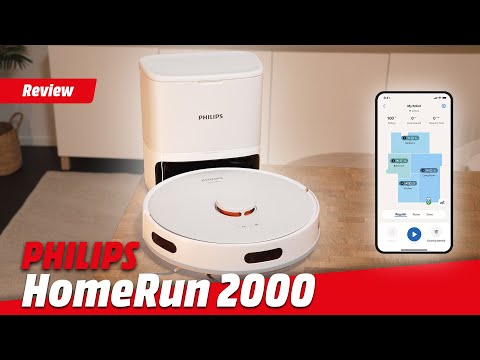 De robot die tegelijkertijd stofzuigt en dweilt | De Philips HomeRun 2000MediaMarkt Nederland


