
-
LatestThe best Vacuum cleaner of 2026
-
 Bosch Flexxo Serie 4 BBH3ALL28 Handy cordless vacuum for quick everyday home cleanups
-
 Rowenta X-Clean 10 GZ7540 Cordless cleaner vacuums and washes hard floors simultaneously.
-
 Dreame Z40 Station Powerful cordless cleaning with convenient hands-free dust emptying.
-
 Dreame H15 Pro Cordless cleaner tackles spills and debris on floors
-
 Dreame H14 Pro Cordless wet-dry floor cleaning with hot-water self-cleaning
-
 Dreame Z20 Powerful cordless cleaning, versatile tools, and extended runtime
-
-
LatestThe best Vacuum cleaner of 2026
-
 Miele Guard L1 AllFloor Parquet Premium bagged canister vacuum for mixed flooring.
-
 Miele Guard S1 Compact bagged vacuum for dependable everyday home cleaning
-
 Rowenta Silence Force RO7740 Quiet, versatile bagged vacuum for everyday whole-home cleaning.
-
 AEG AB51C2SW 5000 Clean Practical bagged vacuum for everyday floors and carpets.
-
 Nilfisk One Allergy Compact bagged vacuum with HEPA 14 filtration for cleaner homes.
-
 Inventum ST306RZA Practical bagged vacuum for straightforward everyday home cleaning
-
-
LatestThe best Vacuum cleaner of 2026
-
 Philips 2000 Series FC8243/09 Lightweight bagged vacuum for simple everyday floor cleaning.
-
 Philips 2000 Series XB2125/09 Compact bagless vacuum for everyday hard-floor cleaning.
-
 Bosch BGC21POW1 Practical bagless cylinder vacuum for everyday mixed-floor cleaning
-
 Bosch BGC05AAA1 Serie 2 Compact bagless vacuum for everyday cleaning in small homes.
-
 AEG AL61C2OG Clean 6000 Practical bagless cylinder vacuum for everyday household floors.
-
 BOSCH BGC21HYG1 Series 4 Compact bagless vacuum with hygienic filtration for homes
-
-
LatestThe best Vacuum cleaner of 2026
-
 Shark Rotator Pet Pro LA555 Flexible corded upright for floors, stairs, and upholstery
-
 Shark ZU62 Navigator Zero-M Pet-friendly upright with tangle-resistant brushroll, spacious dust cup.
-
 Shark NV501 Rotator Professional Lift-Away Versatile upright with detachable pod and HEPA filtration
-
 Shark ZU561 Navigator Lift-Away Speed Versatile corded vacuum for floors, stairs, and pets.
-
 Shark ZU503AMZ Navigator Lift-Away Versatile corded upright tackles pet hair, carpets, and stairs.
-
-
LatestThe best Vacuum cleaner of 2026
-
 DeWALT D25303DH-XJ Tool-mounted extractor keeps masonry drilling cleaner and faster.
-
 DeWalt DXV20P Wet and Dry High-capacity vacuum for garage, workshop, spill cleanup.
-
 Makita VC4210L Large-capacity workshop vacuum with automatic filter cleaning.
-
 Nilfisk Multi II 30 T Powerful wet-and-dry workshop vacuum for DIY messes.
-
 Nilfisk Multi II 22 T Versatile wet-and-dry vacuum for home workshops and DIY.
-
 Nilfisk Buddy II 18 Compact wet-and-dry cleanup for home, garage, and DIY.
-
-
LatestThe best Robot vacuum cleaner of 2026
-
 Dreame Matrix 10 Ultra Premium robot vacuum with automatic room-specific mop swapping.
-
 Eufy Omni E25 Powerful robot vacuum with a self-cleaning roller mop.
-
 Philips HomeRun 5000 XU5100/10 Convenient mapped vacuuming, self-emptying, and light mopping.
-
 Eureka J15 Pro Powerful vacuuming, smart mopping, and hands-off dock care.
-
 Ecovacs Deebot T50 OMNI Slim, powerful cleaner with hands-off vacuuming and mopping.
-
 Ecovacs Deebot X8 PRO OMNI Premium vacuum-mop with self-rinsing roller and automated dock
-
-
LatestThe best Robot vacuum cleaner of 2026
-
 Blaupunkt Bluebot Xboost BPK-VCBB1XB Affordable robot vacuum-mop for everyday hard-floor upkeep.
-
 Shark AV911S EZ Self-emptying robot vacuum simplifies everyday floor maintenance.
-
 Shark AV753 ION Simple vacuum for everyday dust and pet hair.
-
 iRobot Roomba J7 Smart vacuum dodges clutter, cables, and pet messes.
-
 Eufy BoostIQ RoboVac 11S MAX Slim, affordable vacuum for everyday floor cleaning.
-
 Shark AI Ultra Scheduled, self-emptying floor care for everyday pet hair.
-
-
LatestThe best Hand vac of 2026
-
 BLACK+DECKER BHHV520JF-QW Cordless vacuum for quick home and car cleanups
-
 Philips MiniVac FC6148/01 Compact cleaner for quick crumbs and car touch-ups
-
 BLACK+DECKER DVA325JP07-QW Cordless vacuum for quick pet-hair and crumb cleanups
-
 Shark WV200 Wandvac Lightweight handheld vacuum for quick everyday messes.
-
 BLACK+DECKER PV1820L-QW Pivoting cordless hand vac for quick, awkward-spot cleanups.
-
 Rowenta X-Touch AC9736 Compact cordless vacuum for quick everyday messes.
-
-
LatestThe best Cleaner of 2026
-
 Kärcher SE 6 Signature Line Deep-cleans carpets and upholstery with versatile spray extraction.
-
 BLACK+DECKER 1500W Steam-mop Quick, detergent-free cleaning for compatible sealed hard floors.
-
 Shark StainStriker PX200EUT Portable spot cleaner tackles spills on carpets and upholstery.
-
 Kärcher SC 1 EasyFix Compact steam cleaner for quick, chemical-free home touch-ups.
-
 Kärcher SV7 Steam-clean and vacuum hard floors in one pass.
-
 Kärcher SC 3 EasyFix Plus Fast-heating steam cleaning for floors and household details.
-
-
LatestThe best Cleaner of 2026
-
 Nilfisk C 110.7-5 X-TRA Home Compact pressure washer for everyday outdoor cleaning tasks.
-
 Kärcher K7 Premium Power Control Heavy-duty washer for large patios and driveways
-
 Nilfisk Excellent 180-12 Car Powerful home washer for cars, patios, and grime
-
 Kärcher K3 Premium Power Control Compact washer for cars, furniture, and small patios.
-
 Kärcher K2 Power Control Compact, easy-to-use washer for cars, bikes, and patios
-
 Kärcher K5 Premium Power Control Versatile washer tackles patios, cars, and stubborn grime.
-
Nilfisk Buddy II 18 review
Review the Nilfisk Buddy II 18 wet and dry vacuum, with 18L capacity for garage and car cleanup, plus details on suction, filtration, noise and limitations.


 2024-12-24
- By Sven Klinkerdam
Summary / TL;DR

The Nilfisk Buddy II 18 is a compact wet-and-dry vacuum suited to occasional household, car and garage clean-ups. Its 18-litre plastic tank, wheels and accessory holder make it relatively easy to move and store, while the included hose, tubes and nozzles cover basic tasks. It handles loose debris and modest spills, but is not a carpet extractor or a certified solution for hazardous fine dust. A washable filter helps limit upkeep, though dust bags can reduce mess when collecting fine dry material. Switching between wet and dry use requires checking the bag and filter setup. At around 74 dB(A), it is relatively loud, and its capacity and construction are better suited to home DIY than frequent heavy-duty trade work.
If you like this review, you might also like our review on the Nilfisk Multi II 30 T or Nilfisk Multi II 22 T.
Introduction
The Nilfisk Buddy II 18 is a compact wet and dry shop vacuum for jobs a household vacuum isn’t built to handle: picking up sawdust after a shelf repair, cleaning grit from a car footwell, or dealing with a small spill in the garage. Its 18-litre capacity gives it more room than a typical handheld cleaner, without making it the sort of machine you’d reserve for a large workshop.
That makes it a practical middle ground for DIYers and homeowners who want one wet and dry vacuum cleaner for the garage, car, and home. It’s best viewed as a useful helper for occasional messes rather than a heavy-duty extractor for daily trade work. If your usual cleanup involves tracked-in dirt, wood shavings, or the odd tipped bucket, this shop vac has a clear job to do.
Related reviews
-

-
 Nilfisk Multi II 30 TShop vacuum cleaners
-
 Nilfisk Multi II 22 TShop vacuum cleaners
What's in the Box
The box includes the basics for common garage and household clean-ups: a suction hose, extension tubes, a floor nozzle, a crevice tool and a dust bag. Depending on the retailer and country, the filter supplied can differ, so check the listing if you need a particular filter for wet or dry use.
- Suction hose for connecting the vacuum to its accessories
- Extension tubes to reach floors without crouching or get up to low shelves
- Wet-and-dry floor nozzle for general floor cleaning
- Crevice nozzle for narrow spots such as car-seat gaps and along workshop skirting boards
- Dust bag and filter, supplied contents depending on the specific package
There’s no long accessory list to sort through, which suits a straightforward wet and dry shop vacuum. The crevice tool is especially handy for picking up sawdust from the edge of a workbench, though you may need to buy extra attachments separately for more specialised jobs.
Design and Build Quality
The Nilfisk Buddy II 18 keeps its design practical rather than flashy. Its 18-litre tank is made from robust polypropylene, a tough plastic that helps keep the vacuum lighter than a comparable metal-bodied shop vac. That’s handy when you need to move it between a garage, shed and car boot, though the plastic shell can feel less substantial than a steel tank.
A compact body built for everyday knocks
The rounded tank and low-set wheels give the vacuum a stable, compact shape. Two large rear wheels help it roll over small bumps, while the front swivel wheels make it easier to steer around a workbench or chair legs. The carry handle is useful for lifting it over a doorstep; the short, squat body is less awkward to pick up than a tall workshop vacuum.
Nilfisk has also moulded a built-in accessory holder into the body for keeping accessories close by. It’s a small but worthwhile detail: floor nozzles and tubes are easy to misplace in a crowded garage, and having somewhere to park them makes the vacuum simpler to put away. The overall construction feels suited to routine home and DIY use, although I wouldn’t treat the plastic tank as indestructible—avoid dropping it down steps or dragging it over sharp rubble.
Setup and Ease of Use
Getting the Nilfisk Buddy II 18 ready is mostly a matter of fitting the wheels, connecting the hose and choosing the right nozzle. The wheels may arrive loose in the box; they push into the base without a complicated assembly process, though a firm press helps seat them properly. The hose and accessories use Nilfisk’s click system, so changing from the wet-and-dry nozzle to the crevice tool is quick and does not call for adapters.
First-time setup
Before switching it on, check that the filter and any dust bag are fitted for the job you’re doing. A dust bag is useful for dry debris such as sawdust or plaster dust, but it should be removed before picking up liquid. Filter arrangements can vary between versions and packages, so follow the instructions supplied with your machine rather than assuming every kit includes the same parts.
The hose, extension tubes and nozzle are easy to put together by hand. For example, you can leave the tubes attached for cleaning a garage floor, then pull them apart and fit the narrow nozzle to reach crumbs along a car-seat rail. The main setup drawback is that the instructions are worth a quick read before wet cleaning: sorting out the bag and filter first is easier than stopping halfway through a spill.
Wet and Dry Cleaning Performance
For everyday wet and dry shop vacuum cleaning, the Buddy II 18 handles the jobs that make a normal household vacuum a bad choice. It can pick up dry workshop debris, then deal with small spills and puddles once it’s set up for wet pickup. That makes it handy for a damp boot tray, a leaky utility-room pipe or water left in the bottom of a car footwell.
Dry mess is straightforward: sawdust, crumbs, leaves and similar loose debris can go straight into the drum. For liquid pickup, remove the dust bag and use the vacuum’s wet-cleaning setup; a bag left in place can get soaked and clog. The built-in float valve stops the vacuum drawing in more liquid when the tank reaches its limit. It’s a useful safeguard, but it doesn’t mean you can leave the machine running unattended while it fills.
What it handles well—and where it has limits
The 18-litre tank suits short cleanup jobs without making the machine oversized for a home garage. It’s a practical wet and dry vacuum for a workshop or car, especially for collecting scattered debris or sucking up a modest spill. It is not a carpet washer: it won’t scrub stains out of fabric or extract deeply soaked water from upholstery. For those jobs, a dedicated extractor is a better fit.
One small trade-off is that switching between dry and wet work takes a little preparation, particularly if you’re using a dust bag for fine dry debris. Still, for mixed jobs—say, vacuuming sawdust after a repair and then clearing water near the workbench—the wet-and-dry design saves you from reaching for a separate machine.
Suction and Filtration
The suction figures give a useful sense of what this shop vac can handle: the motor produces up to 200 mbar of vacuum pressure, with airflow rated at around 30 litres per second. In practical terms, it has enough pull for sawdust around a workbench, crumbs in a car footwell and small amounts of water on a garage floor. A long trail of heavy, damp grit will take more passes, especially if the hose or nozzle starts to clog.
The washable PET filter helps protect the motor and can be rinsed when dust builds up. It’s handy for routine workshop clean-ups: after collecting fine sawdust, for example, check the filter before the next job, since a loaded filter can reduce airflow and make the vacuum feel less effective. Let it dry fully before using it for dry dust again.
For very fine material such as plaster dust, a compatible dust bag is worth using. It catches more of the debris before it reaches the filter and makes emptying less messy. The standard filter is useful for general wet and dry cleaning, but this isn’t a HEPA vacuum, so it’s not the right choice for hazardous dust or jobs that require certified fine-particle filtration. A float mechanism also cuts off suction as the tank fills with liquid, helping prevent water from reaching the motor.
Portability and Noise
At roughly 4.9 kg before accessories, the Nilfisk Buddy II 18 is light enough to move between rooms without much effort. Its wheels make the difference on a longer trip: rolling it from a kitchen to a hallway is easier than carrying a full-size shop vac, though it can bump or tip on a doorstep or uneven paving. The top handle is handy for lifting it into a car, but the 18-litre tank takes up a fair bit of boot space.
The power cord is about 4 metres long, which gives you a reasonable working radius in a garage or small workshop. For a car clean, you may still need to move the vacuum around to reach the far side of the vehicle. The hose and cord can also catch on chair legs or stored tools, so it’s worth keeping the route clear rather than dragging the machine behind you.
Noise is the main trade-off. Nilfisk lists a sound level of around 74 dB(A), which is loud enough to interrupt conversation and may bother people in the next room. That’s fairly typical for a compact wet and dry vacuum, but it isn’t a quiet shop vac for late-night cleaning. For longer jobs, especially in an enclosed garage, hearing protection is a sensible choice.
Maintenance and Running Costs
Day-to-day upkeep is fairly simple: empty the 18-litre collection container, clear debris from the filter, and let any washed parts dry fully before putting them back. The PET filter is washable, which can keep replacement costs down compared with a vacuum that needs a new filter often. Don’t reinstall it damp; a wet filter can restrict airflow and leave an unpleasant smell.
For dry jobs, a compatible dust bag is worth using when you’re collecting fine sawdust or sanding debris. It costs extra, but it keeps the bin cleaner and makes disposal less dusty—handy after a small workshop job, when tipping a container of fine powder into the rubbish can send it straight back into the air. For wet pickup, remove the dust bag and follow the manual’s instructions for the filter setup.
- Lower-cost routine: use the reusable filter, empty the bin outdoors when practical, and rinse the container if grime sticks to it.
- Less-mess routine: fit a replacement bag for dry, dusty cleanups and change it when full rather than shaking it out.
- Extra care: check the filter and hose for clogs after collecting larger debris; a blockage can make the motor work harder.
The main ongoing expense is therefore bags, if you choose to use them, plus an occasional filter replacement if the original wears out or gets damaged. Prices vary by retailer, so check that bags are listed as compatible with the Buddy II 18 before ordering. For occasional car cleaning, workshop spills, or a bit of DIY sawdust, the washable filter helps keep shop vacuum maintenance costs modest; frequent fine-dust work will use bags more quickly.
Competitor comparison
The Nilfisk Buddy II 18 sits between compact household wet-and-dry vacuums and larger workshop models. Its 18-litre capacity is a practical middle ground: roomy enough for sawdust after fitting shelves or water from a small leak, without the bulk of a 30-litre machine.
| Model | Where it has the edge | What that means in practice |
|---|---|---|
| Nilfisk Buddy II 18 | Balanced size for mixed home and garage jobs | A sensible pick for occasional DIY, car cleaning and small spills |
| Kärcher WD 3 | Well-known range with a large choice of compatible accessories | Worth a look if you want to build around one brand’s nozzles and extensions |
| Einhell TC-VC 1820 S | 20-litre stainless-steel tank on many versions | Offers more container capacity, though the metal body may suit a rougher workshop setting better than a lighter household setup |
Against the Kärcher WD 3, the Nilfisk is a close alternative for everyday wet and dry cleaning; the better choice often comes down to accessory availability and local pricing. The WD 3’s broad parts selection can be handy if you need a replacement nozzle years later. The Einhell TC-VC 1820 S is a stronger value comparison for buyers who prefer a stainless-steel tank and a little more capacity, but that larger container is less useful if storage space is tight.
For a typical job—vacuuming a car boot, then clearing a modest pile of drill dust—the Buddy II 18 avoids the oversized feel of many workshop vacuums while still offering wet-and-dry versatility. It is less compelling for daily trade use or repeated, high-volume cleanup, where a larger tank and more robust accessories may justify stepping up. For a compact shop vacuum for home DIY, though, it makes a convincing middle-ground choice.
Conclusion
The Nilfisk Buddy II 18 makes most sense as a home and garage wet and dry vacuum: the kind you keep nearby for sawdust after a small DIY job, muddy marks in the car, or a spill that’s too much for a household vacuum. Its 18-litre capacity gives it room for routine clean-ups without making it a bulky workshop machine.
It’s a practical choice for occasional jobs, but it isn’t a replacement for a specialist dust extractor if you regularly work with fine wood dust. Check that the filter and dust bag suit the material you’re collecting, and don’t expect a shop vac in this price-conscious class to offer the polish or convenience of a premium model. For straightforward household and hobby use, though, the Nilfisk Buddy II 18 offers useful wet-and-dry versatility without asking for much storage space.
Pros & cons
Pros
- Wet-and-dry cleaning versatility
- Lightweight and easy to move
- Useful 18-litre capacity
- Washable PET filter
- Built-in accessory storage
Cons
- Loud at around 74 dB(A)
- Short 4-metre power cord
- Plastic tank less robust than steel
- Not suited to hazardous fine dust
Frequently Asked Questions
The Nilfisk Buddy II 18 is a compact wet and dry vacuum cleaner designed for everyday cleaning jobs around the home, garage, car, workshop, and outdoor areas. It handles both dust and liquids, making it a versatile choice for quick cleanups. Its 18-liter container gives you a practical balance between capacity and portability, so it is easy to move and store while still being useful for larger messes.
The Nilfisk Buddy II 18 comes with a highly effective 1200 watt motor. This provides strong suction for vacuuming dust, dirt, and liquid spills. It is built to deliver reliable everyday performance while staying compact and easy to handle. For users looking for a small but capable wet and dry vacuum, the motor power is one of its main selling points.
Yes, the Nilfisk Buddy II 18 is made for both wet and dry cleaning. You can use it for dry debris like dust, sawdust, and crumbs, as well as wet messes such as spilled water or other non-hazardous liquids. This makes it a flexible cleaning solution for homes, cars, garages, and workshops where different types of messes happen regularly.
The Nilfisk Buddy II 18 has an 18-liter container. That capacity is ideal for general household and workshop cleaning because it reduces how often you need to empty the tank. The container is made from robust polypropylene, which helps keep the vacuum lightweight while still durable enough for regular use.
Yes, the Nilfisk Buddy II 18 includes a blow function. This feature gives you extra cleaning options, especially for blowing dust, leaves, or debris out of hard-to-reach spaces. It is useful for outdoor tasks, garage cleaning, and jobs where vacuuming alone is not the most practical method.
The Nilfisk Buddy II 18 has a noise level of about 74 dB(A) for working sound level, with listed sound values also shown at 87 dB(A) depending on the specification reference. In practice, it is a typical noise level for a compact wet and dry vacuum in this category. If noise is important, it is best used for short cleaning sessions in homes or workshops rather than silent operation.
The Nilfisk Buddy II 18 typically comes with a wet and dry cleaning kit and a crevice nozzle. Some listings also mention a suction hose and standard wet/dry filter set. Included accessories can vary by market or retailer, so it is smart to check the exact package contents before buying. The built-in accessory holder also helps keep tools organized.
The Nilfisk Buddy II 18 weighs about 4.9 kg. That makes it lightweight enough to carry around the house, garage, or workshop without much effort. The compact size and low weight are major advantages if you want a vacuum that is easy to move, store, and use in different places.
The Nilfisk Buddy II 18 measures approximately 36 x 33 x 53 cm. Its compact footprint makes it a practical choice when storage space is limited. Even though it has an 18-liter container, the design remains relatively small and easy to place in a utility room, garage, or car boot.
The Nilfisk Buddy II 18 comes with a 4-meter power cable. Combined with its hose length, this gives a useful working range for everyday cleaning tasks without needing to move the plug constantly. It is a good fit for compact cleaning jobs, though larger areas may still require changing sockets.
Important
Before buying any product, check all details of this product on the website or in the store where you purchase it. Aspects and specifications mentioned in the text above might differ.

Written by Sven Klinkerdam
Sven Klinkerdam is a distinguished review writer with over a decade of experience specializing in vacuum cleaner technology. He has established himself as an authority in the field of home appliance reviews, particularly focusing on stick, robot, and shop vacuum cleaners. Known for his thorough and unbiased evaluations, Sven's reviews are a trusted resource for consumers seeking to make informed purchasing decisions.
With a background in electronics and home gadgets, Sven's expertise is rooted in practical experience gained while working at Dixons and in product development. His reviews are characterized by a deep understanding of consumer needs, rigorous product testing, and clear communication of technical details. Outside of his professional pursuits, Sven enjoys outdoor activities like fishing and boating, which provide a refreshing balance to his work and inspire his engaging writing style.
Read more about SvenMore Nilfisk reviews
Videos
-
 Nilfisk Buddy II 18Nilfisk Chile
-
 Nilfisk Buddy II Car Pack vs Nilfisk Multi 22 T - what's best for your car?Supercharged Llama Detailing
-
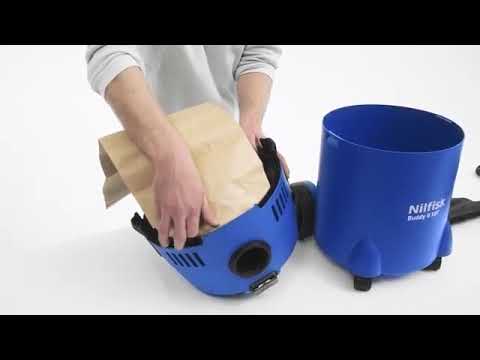 Nilfisk Buddy II 18 , videoNilfisk Argentina
-

-
 Unboxing video of Nilfisk buddy II 18T Wet & Dry vacuum cleanerNilfisk Consumer UK and Ireland
-
 Nilfisk Buddy II 18 T EU Wet and Dry Vacuum Cleaner - Assembly tutorialAgriEuro International
More related reviews
-
 DeWalt DWV901L-QSShop vacuum cleaners
-

-
