
-
LatestThe best Vacuum cleaner of 2026
-
 Bosch Flexxo Serie 4 BBH3ALL28 Handy cordless vacuum for quick everyday home cleanups
-
 Rowenta X-Clean 10 GZ7540 Cordless cleaner vacuums and washes hard floors simultaneously.
-
 Dreame Z40 Station Powerful cordless cleaning with convenient hands-free dust emptying.
-
 Dreame H15 Pro Cordless cleaner tackles spills and debris on floors
-
 Dreame H14 Pro Cordless wet-dry floor cleaning with hot-water self-cleaning
-
 Dreame Z20 Powerful cordless cleaning, versatile tools, and extended runtime
-
-
LatestThe best Vacuum cleaner of 2026
-
 Miele Guard L1 AllFloor Parquet Premium bagged canister vacuum for mixed flooring.
-
 Miele Guard S1 Compact bagged vacuum for dependable everyday home cleaning
-
 Rowenta Silence Force RO7740 Quiet, versatile bagged vacuum for everyday whole-home cleaning.
-
 AEG AB51C2SW 5000 Clean Practical bagged vacuum for everyday floors and carpets.
-
 Nilfisk One Allergy Compact bagged vacuum with HEPA 14 filtration for cleaner homes.
-
 Inventum ST306RZA Practical bagged vacuum for straightforward everyday home cleaning
-
-
LatestThe best Vacuum cleaner of 2026
-
 Philips 2000 Series FC8243/09 Lightweight bagged vacuum for simple everyday floor cleaning.
-
 Philips 2000 Series XB2125/09 Compact bagless vacuum for everyday hard-floor cleaning.
-
 Bosch BGC21POW1 Practical bagless cylinder vacuum for everyday mixed-floor cleaning
-
 Bosch BGC05AAA1 Serie 2 Compact bagless vacuum for everyday cleaning in small homes.
-
 AEG AL61C2OG Clean 6000 Practical bagless cylinder vacuum for everyday household floors.
-
 BOSCH BGC21HYG1 Series 4 Compact bagless vacuum with hygienic filtration for homes
-
-
LatestThe best Vacuum cleaner of 2026
-
 Shark Rotator Pet Pro LA555 Flexible corded upright for floors, stairs, and upholstery
-
 Shark ZU62 Navigator Zero-M Pet-friendly upright with tangle-resistant brushroll, spacious dust cup.
-
 Shark NV501 Rotator Professional Lift-Away Versatile upright with detachable pod and HEPA filtration
-
 Shark ZU561 Navigator Lift-Away Speed Versatile corded vacuum for floors, stairs, and pets.
-
 Shark ZU503AMZ Navigator Lift-Away Versatile corded upright tackles pet hair, carpets, and stairs.
-
-
LatestThe best Vacuum cleaner of 2026
-
 DeWALT D25303DH-XJ Tool-mounted extractor keeps masonry drilling cleaner and faster.
-
 DeWalt DXV20P Wet and Dry High-capacity vacuum for garage, workshop, spill cleanup.
-
 Makita VC4210L Large-capacity workshop vacuum with automatic filter cleaning.
-
 Nilfisk Multi II 30 T Powerful wet-and-dry workshop vacuum for DIY messes.
-
 Nilfisk Multi II 22 T Versatile wet-and-dry vacuum for home workshops and DIY.
-
 Nilfisk Buddy II 18 Compact wet-and-dry cleanup for home, garage, and DIY.
-
-
LatestThe best Robot vacuum cleaner of 2026
-
 Dreame Matrix 10 Ultra Smart vacuum with advanced navigation and mopping features.
-
 Eufy Omni E25 Compact robot vacuum with strong suction and mopping.
-
 Philips HomeRun 5000 XU5100/10 Smart, efficient cleaning with advanced navigation technology.
-
 Eureka J15 Pro Powerful vacuuming, smart mopping, and hands-off dock care.
-
 Ecovacs Deebot T50 OMNI Slim, powerful cleaner with hands-off vacuuming and mopping.
-
 Ecovacs Deebot X8 PRO OMNI Premium vacuum-mop with self-rinsing roller and automated dock
-
-
LatestThe best Robot vacuum cleaner of 2026
-
 Blaupunkt Bluebot Xboost BPK-VCBB1XB Affordable robot vacuum-mop for everyday hard-floor upkeep.
-
 Shark AV911S EZ Self-emptying robot vacuum simplifies everyday floor maintenance.
-
 Shark AV753 ION Simple vacuum for everyday dust and pet hair.
-
 iRobot Roomba J7 Smart vacuum dodges clutter, cables, and pet messes.
-
 Eufy BoostIQ RoboVac 11S MAX Slim, affordable vacuum for everyday floor cleaning.
-
 Shark AI Ultra Scheduled, self-emptying floor care for everyday pet hair.
-
-
LatestThe best Hand vac of 2026
-
 BLACK+DECKER BHHV520JF-QW Cordless vacuum for quick home and car cleanups
-
 Philips MiniVac FC6148/01 Compact cleaner for quick crumbs and car touch-ups
-
 BLACK+DECKER DVA325JP07-QW Cordless vacuum for quick pet-hair and crumb cleanups
-
 Shark WV200 Wandvac Lightweight handheld vacuum for quick everyday messes.
-
 BLACK+DECKER PV1820L-QW Pivoting cordless hand vac for quick, awkward-spot cleanups.
-
 Rowenta X-Touch AC9736 Compact cordless vacuum for quick everyday messes.
-
-
LatestThe best Cleaner of 2026
-
 Kärcher SE 6 Signature Line Deep-cleans carpets and upholstery with versatile spray extraction.
-
 BLACK+DECKER 1500W Steam-mop Quick, detergent-free cleaning for compatible sealed hard floors.
-
 Shark StainStriker PX200EUT Portable spot cleaner tackles spills on carpets and upholstery.
-
 Kärcher SC 1 EasyFix Compact steam cleaner for quick, chemical-free home touch-ups.
-
 Kärcher SV7 Steam-clean and vacuum hard floors in one pass.
-
 Kärcher SC 3 EasyFix Plus Fast-heating steam cleaning for floors and household details.
-
-
LatestThe best Cleaner of 2026
-
 Nilfisk C 110.7-5 X-TRA Home Compact pressure washer for everyday outdoor cleaning tasks.
-
 Kärcher K7 Premium Power Control Heavy-duty washer for large patios and driveways
-
 Nilfisk Excellent 180-12 Car Powerful home washer for cars, patios, and grime
-
 Kärcher K3 Premium Power Control Compact washer for cars, furniture, and small patios.
-
 Kärcher K2 Power Control Compact, easy-to-use washer for cars, bikes, and patios
-
 Kärcher K5 Premium Power Control Versatile washer tackles patios, cars, and stubborn grime.
-
Kärcher T 7/1 Classic review
Review the Kärcher T 7/1 Classic: a lightweight commercial dry vacuum with 7.5L capacity for offices and floors, but not wet pickup.


 2024-11-28
- By Jelle Morswijck
Summary / TL;DR

The Kärcher T 7/1 Classic is a compact, lightweight dry vacuum suited to routine cleaning in small offices, shops and similar spaces. It handles dust, crumbs and grit on hard floors and performs adequately on low-pile carpet, though thicker carpets may need more passes. Its 7.5-litre capacity, 7.5-metre cable and included fleece bag make everyday use practical, while the washable filter basket offers a reusable alternative.
The simple design is easy to carry and store, but the plastic body is less suited to rough workshop use. The standard kit includes few specialist attachments, and the vacuum is not intended for liquids, heavy debris or deep carpet cleaning. It is a practical option for regular indoor dry cleaning, rather than a replacement for a wet-and-dry shop vacuum.
Introduction
The Kärcher T 7/1 Classic is a compact commercial dry vacuum for everyday floor cleaning, rather than a wet-and-dry shop vac built to handle spills or coarse workshop debris. That distinction matters: it’s better suited to tidying office carpets, hallway grit and the dust tracked through a small business than clearing up a bucket of water or piles of wood shavings.
Its 7.5-litre container gives it more room than many small household vacuums, while its straightforward design suits cleaners who need a machine they can move from room to room without fuss. For a home workshop, it could handle ordinary floor dust and light debris; for regular liquid pickup or heavy construction dust, a purpose-built wet/dry vacuum is the better choice. This review looks at where the T 7/1 Classic earns its keep as a commercial canister vacuum cleaner, and where its dry-only role sets a clear limit.
Related reviews
-

-
 Nilfisk Multi II 30 TShop vacuum cleaners
-
 Nilfisk Multi II 22 TShop vacuum cleaners
What's in the Box
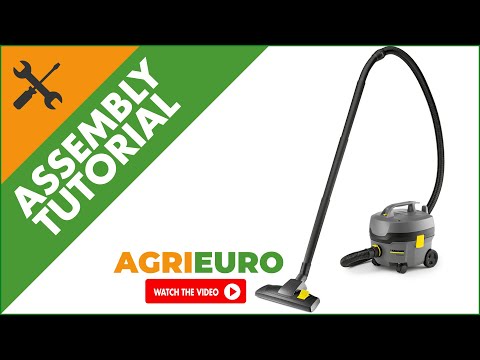
The package includes the basics for dry vacuuming, rather than a big assortment of specialist attachments. You get a 2-metre suction hose with a bend, three plastic suction tubes, a switchable floor nozzle, a fleece filter bag and the permanent fleece filter basket. The three tube sections join together, so you can use fewer sections for a closer clean or the full set for floors without stooping as much.
- 2 m suction hose and bend: Connects the hose to the tubes and gives you a useful grip for steering around furniture.
- Three suction tubes: Each is about 35 cm long, making the set easier to store than one long, rigid tube.
- Floor nozzle: The main attachment for everyday floor cleaning.
- Fleece filter bag and filter basket: The bag is ready for routine dust collection; the permanent basket provides an additional filtration part.
There’s no wide range of small tools in the standard package, so check the retailer’s listing if you need a crevice tool or upholstery nozzle for car seats, stair edges or tight corners. Bundle contents can vary by market, too, but this is the core kit supplied with the Kärcher T 7/1 Classic.
Design and Build Quality
The Kärcher T 7/1 Classic keeps its shape simple: a compact plastic canister, a broad carrying handle and a low-set base on wheels. At about 3.5 kg without accessories and roughly 37.5 × 28.5 × 31 cm, it’s easy to lift into a car or carry up a short flight of stairs. That light weight is handy for quick room-to-room jobs, though the plastic body doesn’t feel as substantial as a metal tank.
The handle is practical rather than padded or oversized, but it gives a secure grip when moving the vacuum between floors. Its small footprint also helps in cramped storage spots; it can tuck beside a shelving unit instead of taking up a full corner of a cupboard. The wheels make it straightforward to pull across hard floors, while the compact body is easier to manoeuvre around chair legs than a larger drum-style shop vacuum.
For a cleaner that may be moved often, the lightweight construction is a real advantage. Just avoid dragging it over rough thresholds by the hose: lifting it by the handle is the safer way to move it, and the plastic casing is better suited to everyday indoor cleaning than rough workshop knocks.
Suction Performance and Cleaning Results
With a maximum vacuum of 23.5 kPa and airflow rated at 40 litres per second, the Kärcher T 7/1 Classic has enough pull for everyday dry vacuuming.
It picks up crumbs, tracked-in grit and dust from hard floors without needing several slow passes. On a typical hallway clean, the difference shows most around door mats and skirting boards, where heavier bits can collect.
It also handles low-pile carpet and office carpet reasonably well, lifting surface dust and loose debris with the supplied floor nozzle. Very fine dust may take a couple of passes on thicker carpet, though: this is a compact commercial vacuum, not a machine with a powered brush roll to agitate deep fibres. Long hair can wrap around the nozzle area, so it’s worth checking there after cleaning.
How it performs on common surfaces
- Hard floors: Effective on crumbs, dust and small bits of grit, including along edges when the nozzle is angled carefully.
- Low-pile carpet: Good for routine upkeep and loose debris; dense or plush carpet takes more effort.
- Workshop mess: Suitable for dry sawdust and similar light debris, but it is not a wet-and-dry vacuum and shouldn’t be used to collect liquids.
In practice, its suction feels steady rather than aggressive, which helps keep the floor nozzle moving smoothly across everyday surfaces. For a commercial dry vacuum cleaner for hard floors and low-pile carpets, the cleaning results are reassuringly capable; deep carpet cleaning is where a brush-equipped model has the edge.
Filtration and Dust Capacity
The 7.5-litre dust container suits routine indoor cleaning, though it fills faster than a large workshop vacuum when you’re picking up sanding dust or debris from several rooms. For a small office, vehicle interior or quick clean-up after drilling, the capacity is usually practical; for a bigger renovation, expect to empty it more often.
A fleece filter bag collects the dust and makes disposal less messy than tipping loose dirt from the container. That’s especially handy after vacuuming fine, dry debris: you can remove the bag without sending a cloud of dust back into the room. The washable permanent filter basket provides another option when you don’t want to use a bag, but a bag is the tidier choice for dusty jobs and helps keep the filter basket cleaner.
There’s no HEPA filtration claim here, so allergy sufferers should check the filtration requirements for their home rather than assume this is an allergy-grade vacuum. It’s also a dry vacuum: the filter setup doesn’t make it suitable for picking up liquids. For everyday dry vacuuming, though, the bag-and-basket arrangement is straightforward and keeps routine filter care simple.
Ease of Use and Noise Level
At roughly 3.5 kg, this is easy to lift between rooms or carry up a flight of stairs, even with the hose and wand attached. The compact body also helps in tight spaces: it’s less awkward to turn around chair legs or park beside a desk than a bulky canister vacuum. Its 7.5-metre power cable gives useful reach in a small office or shop, though a larger room may still mean unplugging and moving to another socket.
Handling around the room
The carrying handle makes quick moves straightforward, and the light weight is handy for jobs such as vacuuming stair treads, where dragging a heavier machine from step to step gets tiresome. The trade-off is that the cable needs a little attention as you work; keep it clear of doorways and chair wheels to avoid stopping to untangle it.
Noise level
Kärcher lists a sound pressure level of 62 dB(A), which is fairly restrained for a commercial-style vacuum. It is still clearly audible, especially in a quiet office, but it is less intrusive than many louder shop vacuums. That makes it more comfortable for routine daytime cleaning, though it won’t disappear into the background during a phone call. Actual noise can vary with the floor nozzle, surface and room acoustics.
Maintenance and Running Costs
Running costs are fairly easy to keep in check because the permanent fleece filter basket can be used without a disposable dust bag. Empty it into a bin after a dusty job, then clean it as needed rather than buying bags for every use. For a small office or workshop, that can make a real difference over months of regular vacuuming.
Filter care and replacement parts
The basket is washable, but let it dry fully before putting it back. A damp filter can restrict airflow and leave you with a vacuum that feels weaker than it should. If you’re cleaning plaster dust, sanding debris or a busy entryway, check the basket more often than you would after picking up ordinary crumbs. Optional filter bags are handy for messy jobs: you can lift out the collected dust with less spillage, though they add a recurring cost.
Routine upkeep is simple: remove debris from the hose and floor tool, inspect the filter for damage, and replace worn parts rather than running the machine with a clogged filter. Kärcher consumables and compatible accessories are widely sold, but prices vary by retailer and country, so check the cost of bags and filters before buying if you expect heavy daily use.
Electricity use
Its rated power is 850 W, so an hour of continuous use draws about 0.85 kWh. At a rate of 30 cents per kWh, that works out to roughly 26 cents for that hour; your actual bill depends on your local electricity price and how long the motor runs. For occasional home clean-ups, electricity is unlikely to be the main expense—the choice between reusable filtration and disposable bags matters more.
Competitor comparison
Compared with a familiar Numatic Henry HVR160, the Kärcher T 7/1 Classic feels more like a straightforward commercial cleaning tool than a general-purpose home vacuum. Henry is a popular choice for homes and small offices, with a 6-litre bag capacity and a reputation for easy-to-find bags and accessories. The Kärcher’s appeal is its lighter, more compact format, which is handy for cleaners moving between rooms or carrying a vacuum up narrow stairs. For a small office that needs quick daily vacuuming, that easier handling may matter more than Henry’s extra capacity.
A wet and dry shop vacuum, such as the Bosch GAS 12-25 PL, suits a different job. Its larger tank and ability to pick up liquid make it the more practical choice for a garage, renovation work or a spill near a workbench. The T 7/1 Classic is designed for dry floor cleaning, so it is the more focused option for carpets, hard floors and routine indoor maintenance—not a substitute for a wet-dry vac after a plumbing leak or DIY mess.
| Alternative | Best suited to | Main trade-off |
|---|---|---|
| Numatic Henry HVR160 | Homes, small offices and longer cleaning sessions | Larger bag capacity, but a bulkier unit to move around |
| Bosch GAS 12-25 PL | Garages, workshops and wet-dry cleanup | More versatile for debris and liquid, but less suited to quick indoor vacuuming |
| Kärcher T 7/1 Classic | Routine dry cleaning in offices and commercial spaces | Compact and purpose-built, but not intended for wet pickup |
In practice, the choice comes down to the mess you expect most often. For dust and everyday floor dirt in a workplace, the Kärcher is a tidy alternative to a larger shop vac. For sawdust, renovation debris or liquid spills, a wet-dry model is the safer buy; for a home vacuum that can handle longer sessions between bag changes, Henry has the edge.
Conclusion
The Kärcher T 7/1 Classic makes the most sense as a straightforward commercial vacuum cleaner for regular, dry cleaning—not as an all-in-one machine with lots of extras. A small office could use it for daily carpet and hard-floor touch-ups, while a cleaner moving between guest rooms may appreciate a simple, work-focused tool that’s easy to bring along.
Its appeal is practical rather than flashy: it gets on with routine jobs without asking you to pay for features you may never use. The trade-off is that it is a dry vacuum, so spills and wet messes need a different machine. For dependable everyday cleaning in offices, shops, hotels, and other modest-sized spaces, the Kärcher T 7/1 Classic is a sensible choice—especially if you value uncomplicated operation over bells and whistles.
Pros & cons
Pros
- Lightweight and compact
- Strong everyday dry-floor cleaning
- 7.5 L dust capacity
- 7.5 m power cable
- Relatively quiet at 62 dB(A)
Cons
- Dry vacuum only; no liquid pickup
- Limited accessories included
- No HEPA filtration claim
- Less effective on deep carpets
Frequently Asked Questions
The Kärcher T 7/1 Classic is a compact dry vacuum cleaner designed for professional cleaning tasks. It is well suited for offices, hotels, shops, and other indoor environments where reliable dry debris pickup is needed. Its lightweight build and strong suction make it practical for daily use and easy transport between cleaning jobs.
The Kärcher T 7/1 Classic has a rated power of 850 W. It delivers strong vacuum performance for its size, with up to 235 mbar / 23.5 kPa of vacuum and 40 l/s air flow. This gives it solid suction for general commercial dry vacuuming.
The Kärcher T 7/1 Classic has a 7-liter container. This capacity is ideal for compact professional cleaning, offering enough space for everyday dry dirt while keeping the machine light and easy to handle. It is a good balance between portability and practical runtime.
The Kärcher T 7/1 Classic operates at 62 dB(A). That makes it relatively quiet for a professional vacuum cleaner, which is helpful in noise-sensitive places such as offices, hotels, and public areas. The lower sound level supports more comfortable cleaning during business hours.
The Kärcher T 7/1 Classic weighs 3.5 kg without accessories. This low weight is one of its biggest advantages because it makes carrying, lifting, and moving the vacuum much easier. It is especially useful for cleaners who need a compact machine they can transport frequently.
The Kärcher T 7/1 Classic comes with a 7.5-meter power cable. This gives a useful cleaning radius and reduces the need to switch power outlets often. For professional cleaning, that extra reach helps improve efficiency and convenience.
The Kärcher T 7/1 Classic typically includes a floor nozzle, a classic bend, a suction hose, a plastic suction tube, and a filter basket. These standard accessories make it ready for dry vacuuming right away. The exact package may vary by market or version, so checking the local product listing is recommended.
Yes, the Kärcher T 7/1 Classic is designed for professional use. Its compact body, strong suction, quiet operation, and light weight make it a practical choice for commercial cleaning teams. It is especially useful where frequent movement and fast cleaning are important.
The Kärcher T 7/1 Classic measures about 375 x 285 x 310 mm, depending on the regional version. Its compact size makes storage simple and helps with maneuverability in tight spaces. This small footprint is a major benefit for professional users working in crowded areas.
Yes, the Kärcher T 7/1 Classic is built for single-phase mains power and works on 220–240 V at 50–60 Hz in many markets. That means it is compatible with standard electrical supplies in regions where this voltage range is used. Always confirm the local specification before purchase.
Important
Before buying any product, check all details of this product on the website or in the store where you purchase it. Aspects and specifications mentioned in the text above might differ.

Written by Jelle Morswijck
Jelle Morswijck is a renowned review writer specializing in cleaning equipment, particularly shop vacuum cleaners and hand vacs. Known for his meticulous attention to detail, Jelle provides comprehensive reviews that are trusted by both consumers and industry professionals. His expertise lies in evaluating product features, functionality, user-friendliness, and design aesthetics, making his insights invaluable for anyone looking to invest in cleaning appliances.
Beyond his professional pursuits, Jelle is an avid cyclist who enjoys exploring the Dutch countryside, which complements his passion for maintaining clean gear and environments. His interest in technology extends to home automation and smart gadgets, allowing him to offer insights into the evolving landscape of cleaning technologies. Engaging actively with his audience through social media and his blog, Jelle shares practical tips for maintaining a clean and efficient home, earning him a loyal following in the cleaning products community.
Read more about Jelle
Videos
-
 Karcher Professional T7/1 Classic – szczegółowy przeglądGierek w Ogrodzie
-
-

-
 Karcher T7/1 Classic - Review and Test3lmo 11080
-
 Odkurzacz przemysłowy karcher T 7/1 ClassicKarcher Center Ocean
-
 Karcher professional T7/1 classic quick reviewElectrolux EW8F161PSTC
More related reviews
-
 Nilfisk Buddy II 18Shop vacuum cleaners
-
 DeWalt DWV901L-QSShop vacuum cleaners
-
